 AI as the New Arms Race
The Issue of Governance
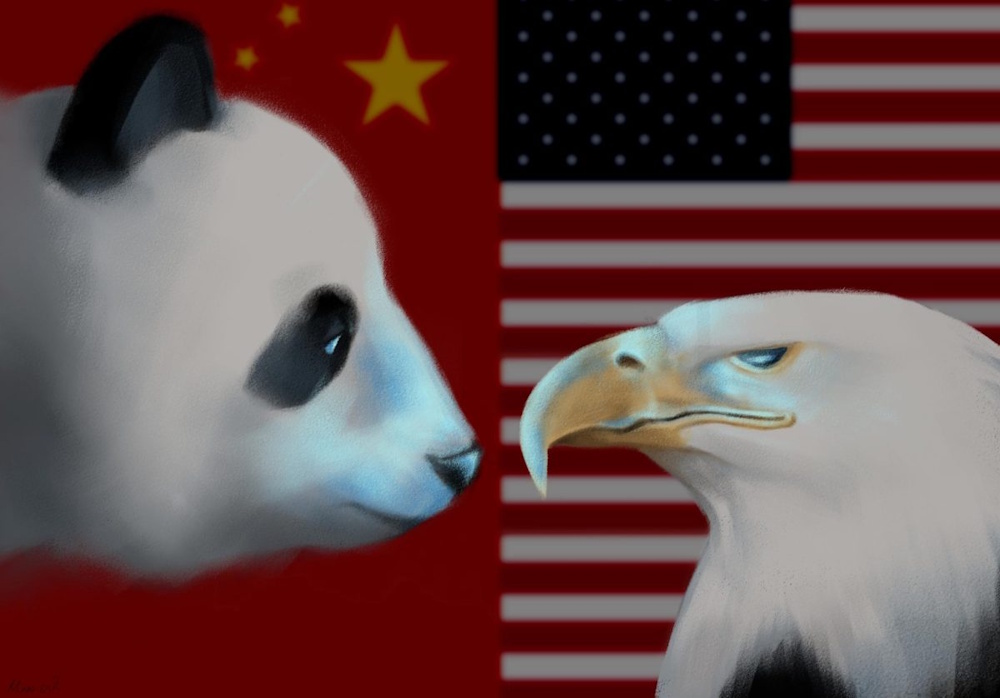
The fundamental difference between American and Chinese AI governance reflects their different political systems. The United States operates within a liberal democratic framework that emphasizes individual rights, limited government, free markets, and distributed decision-making. This produces an AI governance model characterized by light regulation, private sector leadership, civil society participation, with checks and balances across the branches of government.
China's authoritarian system centralizes power, subordinates individual to collective interests, and coordinates economic activity through party-state structures. This produces AI governance characterized by government direction, common industrial policy, coordinated deployment, and an emphasis on stability and party control. AI is explicitly viewed as a tool of state power and social management.
These different philosophies create distinct advantages and disadvantages. American pluralism enables diverse approaches, rapid experimentation, and innovation from multiple sources. Market competition drives efficiency and responsiveness to users. Civil liberties protections constrain surveillance and government overreach.
Chinese centralization enables rapid deployment, coordinated development, and mobilization of resources toward strategic goals. Government can mandate standards, direct investment, and ensure interoperability. Long-term planning addresses collective challenges that market actors might ignore.
The question of which governance model better serves AI development depends on values and priorities. Those valuing innovation, rights, and distributed decision-making prefer American approaches. Those prioritizing coordination, rapid deployment, and collective development prefer Chinese approaches. Both systems of governance have strengths for different challenges, though fundamental differences in values make a synthesis difficult and appeasement more likely to occur.
 Regulatory
Approaches to AI Risk
Regulatory
Approaches to AI Risk
Both nations grapple with AI issues of bias and discrimination, privacy violations, safety failures, and potential catastrophic risks from advanced AI, but their approaches differ significantly.
The United States relies on existing regulatory frameworks such as civil rights laws, FTC polices, and sector-specific agencies that regulate industry. This distributed approach provides flexibility but creates gaps where no agency has clear jurisdiction. Recent executive orders and proposed legislation attempt more comprehensive AI regulation, though Congress has not enacted major AI-specific laws. The regulatory philosophy emphasizes risk-based approaches with heavier regulation for high-risk applications, and a lighter touch for lower risks.
China has rapidly implemented AI-specific regulations with an emphasis on different risks than American concerns. Chinese regulations focus heavily on content control, requiring AI systems refrain from generating prohibited content. Algorithmic recommendation systems face requirements for user controls and audits. Regulations address data security and cross-border data transfers. While Chinese regulations mention fairness and safety, implementation emphasizes government control and approved applications.
The EU's AI Act provides a third model that influences both nations. Its comprehensive risk-based framework categorizes AI systems by risk level with corresponding requirements. Prohibited applications include social credit systems and real-time biometric surveillance in public spaces (with some exceptions). High-risk systems require conformity assessments, transparency, and human oversight. This precautionary approach reflects European values and regulatory traditions.
International coordination on AI safety regulation remains limited. Different values, priorities, and risk assessments make unified approaches difficult to accomplish. Authoritarian nations resist regulations limiting government surveillance and control, while democracies resist subordinating rights to collective interests. Technical cooperation on some safety related issues like preventing AI accidents may be possible even though governance frameworks diverge.
 Data
Governance and Privacy
Data
Governance and Privacy
Data governance is a dimension of AI regulation where US and Chinese approaches are radically different. The United States has historically favored relatively permissive data collection by private companies with privacy laws (HIPAA for health, COPPA for children) rather than comprehensive regulation.
China has enacted comprehensive data protection laws like the Personal Information Protection Law (PIPL) and Data Security Law. These laws establish privacy rights, consent requirements, and restrictions on data transfers. Implementation of these laws prioritizes government interests. Authorities maintain broad access to data for security and surveillance purposes. These laws constrain private companies while enabling government data access, creating surveillance that serves state interests rather than commercial profit.
Data localization requirements mandating data storage within national borders have expanded in both nations. China requires extensive localization, limiting foreign access to Chinese data while ensuring government control. The United States has begun restricting Chinese access to American data, with bans on government use of certain Chinese apps and proposed requirements for foreign adversary data protection.
Cross-border data flows that are essential for global AI development and services are increasingly restricted. Fragmentation into regional data ecosystems constrains AI training on globally diverse data and complicates international AI services. Both nations claim to support data flows but impose restrictions citing security. The lack of trusted international frameworks for data transfers reflects the deeper disagreements about governance and sovereignty.
Differential privacy, federated learning, and other privacy-enhancing technologies offer potential solutions allowing AI development while protecting individual data. Both nations have researched these approaches, though deployment remains limited. Technical solutions alone cannot resolve political disagreements about appropriate data use, but they might enable some cooperation even amid broader tensions.
 Risks
and Concerns
Risks
and Concerns
The increasing separation of American and Chinese technology ecosystems has consequences for AI development. Export controls, investment restrictions, and limits on technical cooperation are creating separate spheres of influence.
Decoupling reduces efficiency through duplication of effort and slower innovation from reduced knowledge sharing. Both nations must develop capabilities they might otherwise import, thereby consuming resources that could support research and development. Researchers lose access to collaborators and knowledge from the other sphere. And standards become fragmented, which can create incompatible technologies.
The global implications are substantial. Other nations face pressures to align either with American or Chinese technology ecosystems. This fragments global markets and constrains the options of smaller nations. Companies operating internationally must navigate incompatible regulatory requirements and technical standards. Developing nations may struggle to access technologies as suppliers restrict exports or demand political alignment.
Decoupling has limits. Complete separation is practically difficult given the global supply chains, international research networks, and commercial incentives for engagement. Some cooperation continues despite the tensions. American companies want access to Chinese markets, and Chinese companies need some American technologies. The question is how much integration can survive the geopolitical competition.
Advocates of decoupling argue that it protects national security, prevents technology transfer from benefiting adversaries, and maintains leverage over China. Critics contend it reduces American competitiveness by excluding Chinese talent and markets, invites retaliation harming American interests, and fails to prevent technology diffusion given the global nature of AI research. The debate reflects tensions between security imperatives and economic interests with no easy resolution.
 Arms
Race Dynamics and Stability Risks
Arms
Race Dynamics and Stability Risks
The AI competition exhibits characteristics of an arms race. Each nation's advance pressures the other to match or exceed them, creating action-reaction cycles that can be difficult to escape. Neither wants to fall behind in military AI, economic competitiveness, or technology, all of which creates incentives for aggressive development despite the risks.
Arms race dynamics can lead to suboptimal outcomes for both parties. Premature deployment of inadequately tested AI systems to avoid falling behind could cause accidents or failures. Pressure to match adversary capabilities might drive development of dangerous AI applications neither nation would pursue absent the competition. Resources consumed in competitive development might be better used addressing shared challenges or non-military applications.
The speed of AI development exacerbates these dynamics. Unlike nuclear weapons or previous arms races where development took years and was somewhat transparent, AI advances rapidly with much occurring in private companies and classified programs. This reduces a warning of breakthroughs and response time, increasing the risks of surprise and miscalculation.
Stability risks are particularly acute in military AI. Autonomous weapons that make kill decisions faster than humans can respond might create use-it-or-lose-it pressures during crises. AI-enabled cyber weapons could escalate conflicts rapidly. Adversarial machine learning techniques might create vulnerabilities by compromising the AI systems on which militaries depend. The integration of AI into nuclear command and control raises catastrophic risks if systems are hacked or malfunction.
Traditional arms control approaches face challenges with AI. Verification is difficult: how do you verify that a nation isn't developing certain AI capabilities when so much happens in software that can be rapidly modified? Defining what to limit is complex given AI's dual-use nature. Neither nation wants to constrain its own AI development, particularly when verification is uncertain.
Nevertheless, some forms of AI arms control might not only be feasible, but also mutually beneficial. Agreements prohibiting certain applications (autonomous nuclear weapons control), establishing norms about testing and deployment, sharing safety research, or creating communication channels to reduce miscalculation risks could enhance both nations' security without requiring intrusive verification or constraining beneficial development.
 Catastrophic
and Existential Risks
Catastrophic
and Existential Risks
Beyond the immediate concerns from competition, advanced AI potentially poses catastrophic risks if development proceeds without adequate safety precautions. As AI systems become more capable and autonomous, the potential consequences increase from misalignment between AI objectives and human values, from technical failures or malicious use.
Experts debate these risks intensely. Some argue that superintelligent AI could emerge within decades with potentially catastrophic consequences if not properly aligned with human values. Loss of control over advanced AI systems could result in outcomes ranging from severe economic disruption to human extinction. Others contend these concerns are speculative and distant, with more immediate AI risks deserving attention.
The US-China competition affects these long-term risks. Competitive pressure to rapidly develop advanced AI might trump safety. If one nation appears close to achieving transformative AI capabilities, the other might then rush development without adequate testing. The incentive to be first with powerful AI could create problems for AI safety.
But competition might also incentivize safety research. Neither nation benefits from catastrophic AI failures. There are common interests in ensuring AI safety. Both have invested in AI safety research, although the amounts remain small in comparison to what has been spent on development. The possibility of a catastrophe from poorly controlled advanced AI could motivate cooperation even amid broader competition.
International cooperation on advanced AI safety faces challenges similar to other arms control: verification difficulties, definitional challenges, and resistance to constrainting strategic technologies. The potentially catastrophic results of failure might create sufficient motivation for some level of cooperation. Confidence-building measures, sharing safety research, and joint work on AI alignment might be feasible even without formal agreements.
The governance challenge is balancing concerns about distant but potentially catastrophic risks against immediate priorities. Both nations face pressure to prioritize near-term applications and competitiveness over speculative long-term safety concerns. But dismissing catastrophic risks as too uncertain to warrant attention could prove disastrous if capabilities develop faster than anticipated.
 Human
Rights and Ethical Concerns
Human
Rights and Ethical Concerns
The US-China AI competition intersects with human rights and ethical concerns. China's deployment of AI for surveillance, social control, and suppression of ethnic minorities has drawn international condemnation. The use of facial recognition to track Uyghurs in Xinjiang, social credit systems constraining freedoms, and pervasive surveillance enabling authoritarian control represent dystopian applications of AI technology.
These applications create moral dilemmas for the AI competition. Should democracies cooperate with China on AI research given its human rights abuses? Should companies sell technologies to China knowing potential misuse for surveillance and control? How should nations respond to Chinese AI technology exports enabling surveillance in other authoritarian states?
The United States faces its own ethical challenges. Concerns about algorithmic bias in criminal justice, facial recognition accuracy gaps across racial groups, and surveillance capabilities of American companies and government agencies raise domestic human rights questions. American AI systems have exhibited discriminatory patterns, and inadequate regulation allows deployment of technologies with unclear societal impacts.
The export of AI technologies by both nations raises ethical concerns. American technology companies have sold surveillance systems to authoritarian governments, though facing increased scrutiny. Chinese companies export surveillance capabilities with fewer restrictions. The global proliferation of powerful surveillance AI, regardless of origin, threatens privacy and freedom worldwide.
Ethical frameworks for AI development differ between nations. The United States and its European allies emphasize individual rights, transparency, accountability, and participatory governance. Chinese approaches emphasize collective welfare, social harmony, and government authority. These differences reflect incompatible values difficult to reconcile through compromise. The question is whether minimal ethical standards that prohibit certain uses and require basic safety testing might gain consensus even without common agreement.
 Scenarios and Strategic Futures
Scenario 1: Continued Competitive Coexistence
In this scenario, US-China AI competition continues at high intensity without either escalating to broader conflict or achieving breakthrough cooperation. Both nations maintain technological capabilities that are competitive though with different strengths. The United States sustains advantages in foundational research, leading companies, and attracting global talent. China leverages its manufacturing integration, data resources, and government coordination.
Technology ecosystems remain partially integrated despite the tensions. A complete decoupling proves impractical as global supply chains, research networks, and commercial incentives maintain some connections. Researchers collaborate informally, open-source software spreads globally, and companies operate in both markets where possible. Sensitive technologies face controls, military applications separate, and trusted technology stacks diverge.
International influence is divided geographically. Developed democracies align primarily with American AI systems and standards. Developing nations and autocracies split between American and Chinese partnerships based on relationships, needs, and values. No universal AI governance framework emerges, with regional variations reflecting different priorities.
Military AI develops in both nations but without breakthrough capabilities triggering arms race spirals or conflicts. Incremental improvements in autonomous systems, cyber capabilities, and intelligence analysis occur steadily. Both nations exercise some restraint on the most destabilizing applications through informal norms rather than formal agreements.
This scenario avoids catastrophic downside risks - major war, technology collapse - but also fails to realize the full benefits of cooperation. Duplicated effort, reduced knowledge sharing, and resource diversion into competitive rather than beneficial development slow progress. Both nations manage competition relatively successfully though the world forgoes any potential gains from collaboration.
Scenario 2: American Technological Lead Maintained
In this scenario, the United States maintains and potentially expands its AI leadership through accellerating advantages in innovation, talent, and commercial applications. Breakthrough algorithms, architectural innovations, or training techniques from American institutions propel capabilities substantially beyond Chinese equivalents. Leading American companies extend their advantages through network effects, ecosystem strength, and accumulated learning.
Chinese efforts to achieve AI parity fail. Semiconductor restrictions constrain access to cutting-edge hardware, limiting the development of AI capabilities. Talent drain accelerates as top researchers choose American opportunities over domestic options. Indigenous innovation proves insufficient to match American capabilities that have been developed through decades of iresearch and development.
The United States leverages AI leadership for economic and strategic advantages. American companies dominate global AI markets, with Chinese companies primarily serving domestic markets. Military AI advantages provide the United States with decisive capabilities that enhance deterrence and alliance leadership. International standards and norms reflect American preferences as most nations adopt American technologies and frameworks.
However, this scenario carries some risks. The Chinese perception of falling irreversibly behind might prompt desperate responses (aggressive technology acquisition, military adventurism before gaps widen further, etc), or rejection of international norms written by adversaries. American AI dominance might breed complacency about safety or ethical considerations given a lack of meaningful competition. The concentration of AI power in American companies and government raises concerns about accountability and governance even among allies.
This scenario depends on the United States maintaining conditions that enable its historical advantages - open immigration, research freedom, commercial dynamism, alliance partnerships - all of which face domestic political challenges. The scenario also requires China's centralized approach to prove less effective than many expect.
Scenario 3: Chinese AI Ascendancy
This scenario envisions China achieving AI leadership through successful execution of its coordinated strategy, indigenous innovation, and leveraging its structural advantages. China successfully develops advanced semiconductors despite export controls, reducing its dependence on American technology. Massive investments in research and talent development produce breakthroughs, while the integration of AI throughout its economy produces leading software applications.
Chinese companies expand globally through lower costs, integrated ecosystems, and government support. Belt and Road AI partnerships establish Chinese technologies and standards throughout the developing world. Data advantages and manufacturing integration create superior AI applications in key areas. Talent that previously flowed to the United States increasingly remains in or returns to China given improved opportunities and nationalistic appeals.
The United States struggles to maintain competitiveness. Political dysfunction prevents effective industrial policy responses. Immigration restrictions and declining research funding undermine historical advantages. Private sector fragmentation prevents coordination at Chinese levels. Allied cooperation proves an inadequate substitute for unified national strategy.
This scenario would profoundly reshape the global order. Chinese AI dominance would provide economic advantages compounding into broader power. Military AI superiority could shift regional balances and threaten US alliances. Chinese standards and governance models would spread globally, potentially normalizing surveillance and authoritarian technology applications. The balance of power would shift toward China from the US.
This scenario requires China overcoming significant challenges. Authoritarian systems may struggle with the sustained innovation that is required for AI leadership. Centralization risks catastrophic errors affecting entire programs. International resistance to Chinese technology might limit market access. The Chinese governance model might prove attractive to autocracies, but face opposition from the democracies that comprise much of the global economy.
Scenario 4: Breakthrough Cooperation
This more optimistic scenario envisions the United States and China recognizing shared interests in AI safety, beneficial development, and avoiding catastrophic outcomes, leading to meaningful cooperation despite continued competition in other areas. A catalyzing event could create space for cooperation: perhaps an AI-related accident with serious consequences, a breakthrough suggesting that transformative AI is imminent, or leadership changes that enable diplomatic progress.
Both nations establish the frameworks required for sharing AI safety research. Joint working groups address technical AI safety challenges that include robustness, interpretability, and alignment. Agreements establish norms about high-risk AI applications, with verification mechanisms and transparency in place. Communication channels reduce the risks of miscalculation in AI-related military or cyber incidents.
International governance frameworks emerge with joint US and Chinese participation. Standards-setting bodies develop technical protocols that are acceptable to both nations. Multilateral organizations coordinate AI development assistance to developing nations, reducing the competition for influence through technology exports. Ethical principles gain consensus around minimal standards, prohibiting certain applications, requiring safety testing, protecting fundamental rights, even as differences on comprehensive frameworks persist.
Research collaboration increases through carefully structured partnerships that protect sensitive technologies while enabling joint work on fundamental questions. Academic exchanges resume with appropriate security measures in place. Open-source AI development continues with both nations contributing to the effort. The global AI research community rebuilds connections that were frayed by geopolitical tensions.
This scenario requires both nations overcoming significant obstacles. Domestic political pressures in each country oppose cooperation with adversaries. Military and intelligence communities resist transparency about AI capabilities. Verification challenges and definitional ambiguities complicate agreements. A deficit of trust accumulated from years of tension makes cooperation difficult even when it is mutually beneficial.
The stakes might justify overcoming these obstacles. If advanced AI indeed poses catastrophic risks, cooperation becomes imperative regardless of the geopolitical competition. If neither nation can achieve decisive advantages, then continued arms race dynamics waste resources without providing security. If global challenges require advanced AI to address them, cooperation enables faster progress than competition.
This scenario doesn't eliminate competition, for economic rivalry, military positioning, and influence contests continue. But it does compartmentalize competition from domains where cooperation serves both nations' interests. The precedent of US-Soviet arms control during the Cold War suggests that adversaries can cooperate on existential threats while competing intensely in other areas.
Scenario 5: Conflict and Disruption
The darkest scenario involves US-China tensions escalating to conflict with AI playing a central role. Multiple pathways could lead to this conclusion: crisis over Taiwan where AI systems factor in military operations, cyber operations involving AI that spiral into broader conflict, economic decoupling creating hostile separate blocs, or domestic pressures in either nation leading to aggressive international actions.
AI could exacerbate conflict in multiple ways. Autonomous weapons might make decisions faster than human command can control. AI-enabled cyber weapons could cause cascading infrastructure failures. Surveillance and intelligence AI might drive poor decisions by providing incomplete or misleading information. The speed and complexity of AI systems could create confusion and miscalculation during critical moments.
A conflict between nuclear-armed powers would be catastrophic regardless of AI's role, but AI might increase escalation. If AI systems controlling conventional forces achieve decisive advantages, then the losing party might face pressure to escalate the conflict to nuclear weapons. AI involvement in nuclear command and control, whether for enhanced control or as a vulnerability to adversary attacks, could destabilize deterrence. The fog of war thickens when AI systems operate at speeds exceeding human comprehension.
Beyond direct military conflict, economic warfare involving AI could be extraordinarily damaging. Attacks on AI infrastructure - data centers, communication networks, semiconductor supply chains - could cripple economic activity. AI-enabled financial attacks could disrupt markets. Coordinated AI-powered disinformation could undermine social cohesion and governance in adversary nations.
This scenario would leave both nations worse off regardless of the military outcomes. The economic integration that persists between US and Chinese economies would be severed, causing massive disruption. Global supply chains would fragment catastrophically. International cooperation on challenges requiring collective action (climate change, pandemics, asteroid threats) would collapse. AI development worldwide would be militarized and constrained by conflict imperatives.
Preventing this scenario requires both nations maintaining crisis management capabilities, establishing communication channels, exercising restraint during tensions, and avoiding actions that make conflict more likely. The catastrophic consequences of major power war in the nuclear age should focus minds on avoiding this outcome, though history shows that wars nobody wanted have occurred through escalation, miscalculation, and domestic political pressures.
 Policy Recommendations
Policy recommendations serve to identify critical issues, facilitate public discourse, propose effective solutions, and shape informed decisions. Here are our policy recommendations for the US versus China AI arms race:
Several principles should guide policy:
Maintain Perspective: Competition should serve human flourishing, not become an end in itself. The goal isn't American or Chinese AI dominance but beneficial AI development serving humanity. Nationalistic competition that compromises this broader goal serves no one's long-term interests.
Recognize Interdependence: Complete decoupling is neither feasible nor desirable. Global challenges require cooperation. Technology diffusion continues despite controls. Economic integration benefits both nations. The question is how much interdependence survives competition, not whether to maintain any.
Prioritize Safety: As AI capabilities advance toward potentially transformative or catastrophic levels, safety becomes paramount. Both nations share interests in ensuring that AI systems are robust, aligned with human values, and don't pose existential risks. Cooperation on safety should be possible even amid broader competition.
Preserve Options: Avoid actions that foreclose possible cooperation or make conflict inevitable. Maintain communication channels, preserve research networks where possible, and avoid rhetoric or policies turning the other side into existential enemies requiring total victory. Keep the doors open for diplomacy.
Learn and Adapt: In many respects, today's AI competition is unprecedented. Strategies should be provisional and adaptive, as we learn from successes and failures. Regular reassessment of policies against objectives is essential. Intellectual humility about uncertainty should temper confident predictions.
Global Responsibility: As AI leaders, both nations bear responsibilities to the international community. Decisions about AI development, standards, and governance affect billions. Power should be exercised with an awareness of the global impacts and a consideration for others' interests, not just a narrow national advantage.
 For the United States
Invest in Foundational Capabilities: Maintain advantages in AI research through increased funding for basic research, university support, and fellowship programs attracting global talent. Expand STEM education and broaden participation to develop domestic talent pipeline.
Strategic Industrial Policy: Implement focused industrial policy supporting critical AI infrastructure - semiconductors, cloud computing, data centers - without attempting to direct all AI development centrally. Use procurement, R&D funding, and public-private partnerships to advance capabilities while preserving market innovation. Coordinate across federal agencies and with states to reduce fragmentation.
Immigration Reform: Enact immigration policies to attract and retain international talent essential for AI leadership. Streamline visa processes for STEM students and researchers. Provide pathways to permanent residence for those contributing to American AI capabilities. Balance security vetting with the need for the US to remain the destination of choice for global talent.
Targeted Export Controls: Maintain restrictions on the most advanced AI chips and manufacturing equipment to limit Chinese military and surveillance capabilities. At the same time, recognize limitations like some controls are too broad and invite circumvention. Coordinate with partners to prevent any exploitation of import/export gaps. Implement regular review to ensure controls are in place that advance strategic objectives without incurring excessive costs.
Alliance Coordination: Strengthen AI partnerships with democracies that share values and strategic interests. Establish common technical standards, ethical frameworks, and security practices. Coordinate on a China policy, presenting unified positions on human rights, technology transfer, and market access. Joint research initiatives and shared infrastructure reduce duplication and strengthen capabilities.
Regulatory Framework Development: Develop comprehensive but flexible AI regulation to balance innovation and risk management. Establish frameworks for high-risk applications including algorithmic bias testing, transparency requirements, and accountability mechanisms. Create regulatory capacity to understand and oversee AI systems. Avoid regulatory fragmentation across states that creates compliance burdens.
Safety Research Prioritization: Increase investment in AI safety research to address potential catastrophic risks from advanced systems. Support technical AI alignment research, robustness testing, and interpretability. Establish safety standards for frontier AI development. Create incentives for responsible development practices in the private sector.
Selective Cooperation Channels: Maintain openness for cooperation with China on shared interests including AI safety research, standards for civilian applications, and crisis communication. Establish working groups that address technical safety questions and norms for military AI. Balance cooperation with competition, compartmentalizing where possible.
 For China
Enhance Indigenous Innovation: Reduce dependence on foreign technologies through investments in fundamental research and breakthrough innovation rather than incremental advances. Create environments that enable unconventional thinking and the risk-taking necessary for frontier research. Reduce bureaucratic constraints on researchers and diversify approaches rather than centralizing too heavily.
Semiconductor Self-Sufficiency: Continue prioritizing advanced semiconductor capabilities essential for AI leadership. Invest in lithography development, manufacturing processes, and chip design. Recognize this requires a long-term commitment as catching up to the cutting edge takes years or decades. Accept that some applications may need to use less advanced but domestically available chips.
Address International Concerns: Recognize that surveillance technology exports and human rights issues create opposition limiting international market access and partnerships. Consider whether short-term gains from surveillance exports outweigh the long-term costs of international resistance. Some moderation of domestic surveillance might improve international standing without threatening their core interests.
Talent Development: Expand beyond quantitative advantages in STEM education to develop creativity, critical thinking, and interdisciplinary approaches valuable for frontier research. Create academic environments with greater intellectual freedom and international engagement. Attract global talent beyond ethnic Chinese communities through competitive environments and quality of life.
Standards and Norms: Engage constructively in international standards-setting, demonstrating a willingness to accept multilateral frameworks rather than insisting on Chinese preferences for all issues. Build credibility through technical contributions and reasonable positions. Recognize that influence comes from attraction as well as assertion.
Safety and Ethics: Invest in AI safety research and demonstrate a commitment to responsible development. Address algorithmic bias, testing requirements, and safety standards. Participate in international AI safety discussions. Recognize the possibility of catastrophic risks from advanced AI. Leadership on AI safety could enhance China's standing while still serving national interests.
Selective Cooperation: Maintain an openness to cooperating with the United States on shared interests despite the competition. AI safety research, technical standards for civilian applications, and crisis communication serve Chinese interests. Demonstrate a willingness to compromise where appropriate, building trust that might enable broader cooperation.
 For the International Community
Neutral Platforms: Establish and strengthen international organizations and forums where US-China AI cooperation can occur on neutral ground. Academic conferences, standards bodies, and research collaborations that predate recent tensions should be preserved and supported. Smaller nations and international organizations can facilitate dialogue.
Developing Nation Interests: Developing nations should resist pressure to align exclusively with either power, maintaining flexibility to adopt technologies and partnerships serving their interests. Form coalitions advocating for shared interests in international forums. Develop indigenous AI capabilities reducing dependence on either power.
European Leadership: The EU should leverage regulatory power and technological capabilities to provide alternative model for AI governance emphasizing rights protection, democratic values, and precautionary approaches. European standards can influence global norms even without matching US-China military or economic power. Maintain partnerships with United States while preserving autonomy.
Multi-Stakeholder Governance: Civil society organizations, academic institutions, and international bodies should maintain pressure for responsible AI development. Document human rights abuses involving AI, advocate for safety research, and promote ethical frameworks. Create constituencies for cooperation and safety that counterbalance nationalistic competition.
Arms Control Precedents: Draw on Cold War arms control experience for managing AI competition. Confidence-building measures, communication channels, joint safety research, and limited agreements on highest-risk applications might be achievable even absent comprehensive frameworks. Start with modest cooperation building trust for more ambitious agreements.
 Conclusion
Like the Cold War of the twentieth century, today's race for global AI supremacy between the United States and China represents one of the defining competitions of the twenty-first century. As we've seen, there are profound implications for economic prosperity, military power, governance models, and human flourishing. Both nations possess significant strengths; American advantages in innovation, talent attraction, and commercial ecosystems compete with Chinese benefits from coordination, data resources, and manufacturing integration. Although we believe America is in the lead, neither country holds a clear, across-the-board superiority and the outcome remains uncertain.
The competition drives innovation and investment that accelerate the development of AI capabilities. Both nations are mobilizing resources, developing talent, and pushing technological frontiers. This competition could yield transformative AI systems benefiting humanity through medical breakthroughs, scientific advances, and solutions to global challenges. The energy and focus that competition creates might be necessary for realizing AI's potential.
But, as we've seen, the competition also carries grave risks. Technology decoupling fragments the global ecosystem, reducing efficiency and slowing progress. Arms race dynamics could lead to premature deployment of inadequately tested systems or development of destabilizing forces. Pressure to move quickly might override safety considerations as advanced AI systems are developed. Different governance models create tensions over values including privacy, surveillance, rights, and accountability.
The challenge is managing competition to preserve benefits while avoiding catastrophic outcomes. This requires sophisticated strategies balancing security imperatives with economic interests, protecting sensitive capabilities while enabling knowledge sharing where appropriate, and competing intensely while cooperating selectively on shared interests. Both nations must recognize that some challenges - AI safety, catastrophic risks, global problems requiring advanced AI - may be impossible to address through competition alone.
The path forward likely involves what might be called "cooperative competition" or "managed rivalry." This means competition in most areas with selective cooperation on shared interests, particularly AI safety and avoiding catastrophic risks. Historical precedents like the US-Soviet arms agreements suggest that adversaries can cooperate on existential threats while competing vigorously elsewhere.
The outcome of US-China AI competition will shape the world our children inherit. Whether it produces beneficial AI serving humanity broadly or catastrophic outcomes from conflict, accidents, or misaligned powerful systems depends on choices made now. Both nations, their allies and partners, and the international community share the responsibility for steering competition toward beneficial outcomes.
The race for AI supremacy need not be winner-take-all. Both nations can succeed in developing capable AI systems, both can contribute to human progress through AI applications, and both can benefit from cooperation on shared challenges. The alternative - viewing competition as a zero-sum struggle requiring the other's failure - increases risks of conflict and catastrophe while reducing possibilities for mutual gain.
History will judge this competition not by which nation achieved advantages in publications, patents, or military capabilities, but by whether humanity successfully navigated the transition to an AI-enabled world that is more prosperous, secure, and just than what preceded it. That outcome requires wisdom, restraint, and cooperation alongside the innovation and determination that competition provides.
The challenge facing the leaders of both nations is achieving this balance, competing vigorously where necessary while cooperating generously where possible, pursuing national interests while recognizing a shared stake in the future of humanity with AI as a partner.