 AI in Science, Medicine & Discovery
When Machines Started Solving the Unsolvable
DeepMind headquarters, London. The date is November 30, 2020, exactly two years before the release of ChatGPT. Demis Hassabis, John Jumper, David Baker, and the AlphaFold team gathers around the monitor. The CASP14 (Critical Assessment of protein Structure Prediction) results are about to be announced.
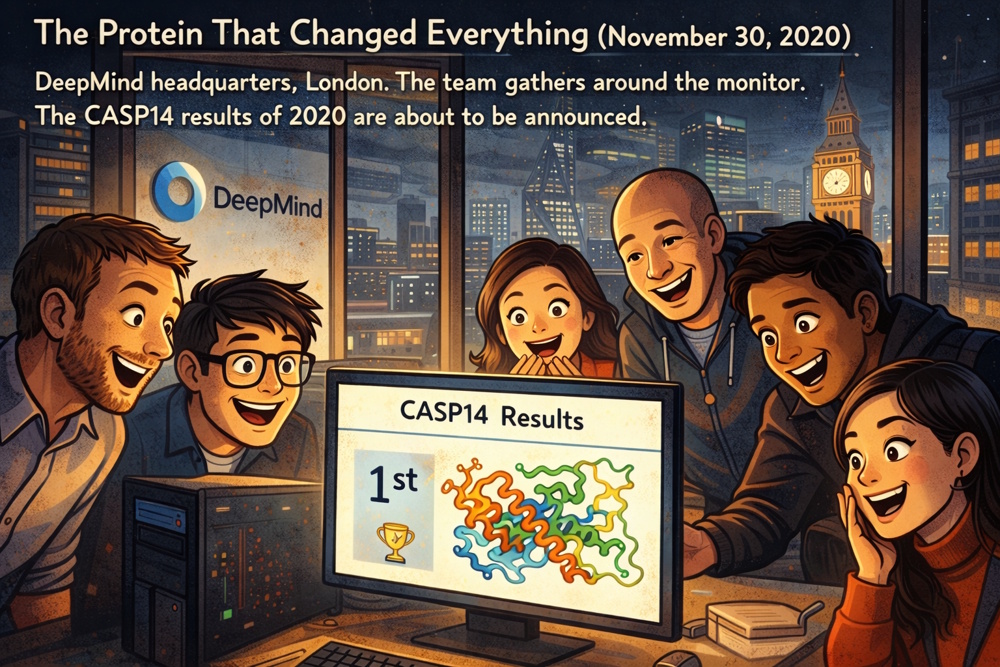
For 25 years, CASP has been the Olympics of protein folding. Every two years, scientists worldwide compete to predict 3D protein structures from amino acid sequences. It's one of biology's hardest problems.
The best human experts achieve ~40% accuracy. The previous AI attempts: Maybe 60%. AlphaFold 2's score appears: 92.4% accuracy.
There is dead silence in the room. Finally, someone whispers: "That can't be right." They check again. It's right.
John Jumper, AlphaFold lead, later recalls: "We solved a 50-year-old problem in biology. I expected to feel triumph. Instead, I felt... vertigo. Like standing on the edge of something vast. If AI can do this, what else can it do?"
The answer is unfolding in real-time. Across science and medicine, AI isn't just assisting human discovery, it's discovering things humans never could.
The revolution isn't coming. It's here.
Much more to come. Stay tuned!
 Links
Links
AI Revolutions home page.