 Powering Intelligence
Energy, Data Centers, and the Infrastructure to Sustain AI in America
Artificial intelligence may be powered by algorithms, but it runs on electricity. Behind every neural network, chatbot, and recommendation engine lies a vast physical infrastructure with data centers, power grids, cooling systems, and semiconductor factories, all consuming energy at an unprecedented scale. As AI continues to accelerate, America faces a paradox: how to sustain the digital brainpower that defines the 21st century without overwhelming the physical systems that keep it alive.
The Hidden Backbone of the AI Revolution
In popular imagination, AI is software, invisible code conjured from the cloud. But the cloud is not a metaphor; it is a global network of concrete, steel, copper, and silicon.
Every AI query runs on a processor. Every processor consumes energy. Every watt of energy must come from somewhere.
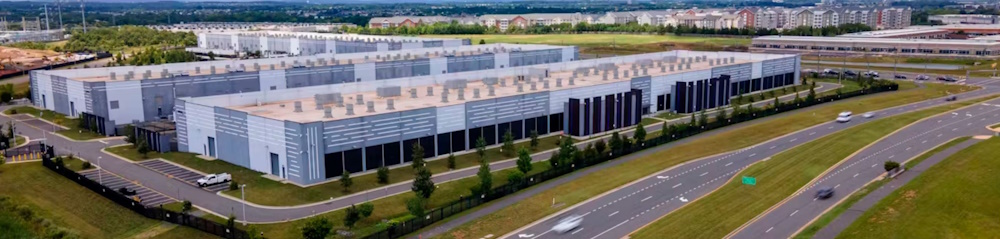
In the United States, that "somewhere" increasingly means data centers. These are massive complexes operated by Amazon Web Services (AWS), Microsoft Azure, Google Cloud, and Meta, alongside specialized AI infrastructure firms like CoreWeave and NVIDIA's DGX Cloud partners. These centers house hundreds of thousands of GPUs, each drawing hundreds of watts of power.
The rise of large language models (LLMs) has transformed AI into one of the fastest-growing energy consumers in the world. A single ChatGPT-class query can use nearly ten times the energy of a Google search. Multiply that by billions of interactions daily, and the scale becomes clear: AI is reshaping the nation's energy landscape.
America's Data Center Belt
Just as the Rust Belt once defined industrial power, the United States now hosts a Data Center Belt.
Northern Virginia (Ashburn, Loudoun County) - the
world's largest data center hub, home to more than 70% of global internet
traffic on some days.
Texas (Dallas?Fort Worth, San Antonio, Austin) - an
emerging cluster supported by low-cost energy and vast land.
Oregon and
Washington State - driven by hydropower and cooler climates ideal for
sustainable operations.
Midwest Expansion (Iowa, Ohio) - fueled by
Google, Meta, and Microsoft, often attracted by renewable energy incentives.
These data centers are not just computing facilities ? they are the new factories of the digital age, humming day and night, transforming electrons into intelligence. Each one requires vast infrastructure: power lines, substations, fiber optic networks, and cooling systems consuming millions of gallons of water per day.
The Energy Equation: AI's Growing Appetite
AI's energy demand has become both an engineering challenge and a geopolitical concern. According to recent estimates, global data center electricity consumption could double by 2030, and AI workloads could account for 20?25% of that growth. In the U.S., utilities in states like Virginia, Georgia, and Arizona are already reporting surges in electricity requests from data center developers.
To maintain growth, America must balance:
Reliability - Ensuring continuous power for critical
systems.
Sustainability - Integrating renewables without sacrificing
uptime.
Scalability - Building infrastructure fast enough to meet
exponential demand.
The White House's 2024 AI Infrastructure Strategy (drafted by the Department of Energy and NSF) called for investment in "energy-aware AI computing," prioritizing efficiency through hardware innovation and smarter scheduling. Meanwhile, private firms are experimenting with liquid cooling, AI-optimized chips, and on-site renewable generation to cut emissions.
The Semiconductor Imperative
No AI system can run without the chips that perform its computations. The U.S. once dominated semiconductor manufacturing, but much of that capability moved to Asia over the last three decades. The CHIPS and Science Act of 2022 marked America's attempt to bring production home, offering $52 billion in subsidies to revitalize domestic chipmaking.
Key developments include:
Intel's new fabs in Ohio and Arizona, focused on
advanced AI-capable chips.
TSMC's U.S. plants in Phoenix, which will
produce cutting-edge 3-nanometer chips for NVIDIA and Apple.
Micron and
Samsung's memory fabs, expanding capacity for AI data storage needs.
The stakes are enormous. If America cannot ensure a stable domestic supply of high-performance chips, it risks ceding control of its AI destiny. The semiconductor ecosystem ? from design to fabrication ? has become a national security issue as much as an economic one.
Renewables, Resilience, and the AI Grid of the Future
As AI energy demand soars, the sustainability question looms large. Data centers require not just raw power but *clean* power.
Tech giants have pledged to achieve carbon-free operations by 2030, investing in solar, wind, geothermal, and small modular nuclear reactors. Microsoft's recent deal with Helion Energy ? to purchase electricity from a fusion reactor by 2028 ? underscores the scale of ambition.
At the same time, energy resilience is becoming critical. AI applications increasingly underpin vital systems ? from hospitals and financial markets to defense and emergency services. Prolonged power outages could cause cascading digital failures.
To prevent this, companies and governments are exploring:
Microgrids - localized power networks for data
centers.
Battery storage - to stabilize renewable generation.
AI-driven energy optimization - using AI itself to predict demand and manage
supply dynamically.
Ironically, the same technology that consumes so much energy may also help optimize its use.
The Geopolitics of Power
AI infrastructure is also strategic infrastructure. The race for energy and data capacity mirrors earlier struggles for oil and steel. Nations with abundant clean power, stable grids, and chipmaking capacity will dominate the next industrial wave.
America's advantage lies in its combination of:
Vast energy resources, both fossil and renewable.
Leading cloud providers, with global scale.
Robust regulatory
environment, capable of balancing innovation and safety.
But China is investing heavily in domestic GPU production, hydroelectric AI zones, and Belt-and-Road data corridors. Europe is developing "AI sovereignty" projects backed by green energy commitments. The global map of intelligence is becoming a map of megawatts.
The Road Ahead: Building Sustainable Intelligence
If AI is to remain America's competitive edge, its infrastructure must evolve beyond brute force computation. Efficiency, transparency, and sustainability must define the next phase.
The future of AI will not be decided solely in Silicon Valley ? but in the substations of Virginia, the chip fabs of Arizona, and the wind farms of the Midwest.
Three imperatives define the road ahead:
1. Invest in green AI infrastructure. Government and
industry must coordinate to build renewable-powered data centers.
2.
Advance AI hardware innovation. Energy-efficient chips ? neuromorphic
processors, optical AI, and quantum accelerators ? will reduce power
intensity.
3. Modernize the national grid. America's electric grid, much
of it built in the mid-20th century, must be upgraded for the digital
century.
Conclusion: Powering the Mind of Machines
Artificial intelligence is not just a digital revolution ? it is an *electrical* one. Every innovation in deep learning, every generative model, every voice assistant rests on a foundation of power, silicon, and infrastructure. America's leadership in AI depends as much on its engineers and scientists as on its electricians, grid planners, and factory workers.
The age of intelligent machines will demand an equally intelligent infrastructure ? one capable of sustaining both progress and planet. If the United States can harness that synergy, it will not only remain the world leader in AI ? it will light the way for the intelligent age.
 Links
Links
AI in America home page
AI Energy home page
AI and the Environment
AI Data Centers